Animal Collection and Nature Reserve
May 2020 Newsletter
Of course, we have all been in lockdown for most of May, only slightly relaxed towards the end, but it has given an opportunity to study more of the natural history of the nature reserve, particularly insects and flowers as well as the very lively breeding pairs of birds.
The beginning of the first week, Rab and Pixie were required to remove a leather from a barn owl. The operation went well but she had a nasty gash. Fortunately, this completely healed and she is as good as new. In April, she was on a clutch of eggs and chicks, but just after we saw the stoats mating in the lane at the end of April, all were broken or taken. We can only think it was the stoats, but we could not find any entry hole. They are so tiny they can make it through the tiniest opening. The good news is she is sitting on a new clutch of eggs. So, we hope for the best.
The same night Cherry and I were already in bed (with our French doors open) when a huge insect came into our bedroom humming loudly and crashing into the furniture. At first we feared it was a hornet but quickly realised it was a cockchafer, also known as a maybug. He had even waited for the 1st of May! Cockchafers are rusty brown beetles which zoom around at night and come into houses attracted by light. They have dark bodies and a pointed abdomen. The larvae are largish white grubs feeding on plant roots for up to three years, before developing into an adult beetle via pupa stage in October, but stays underground until May or June.
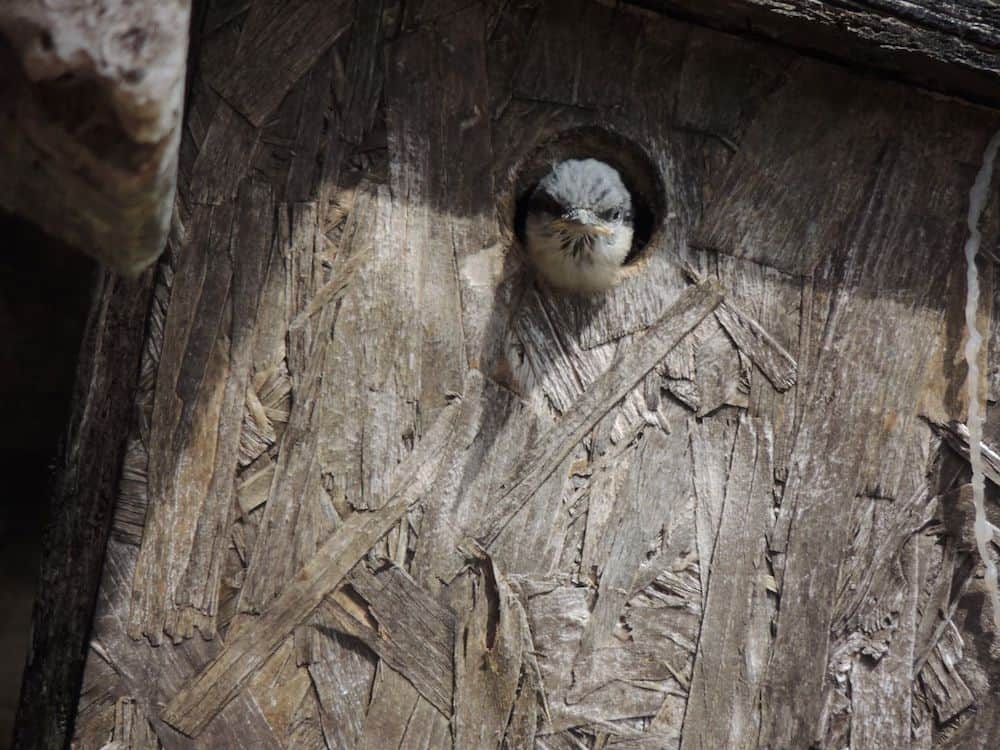
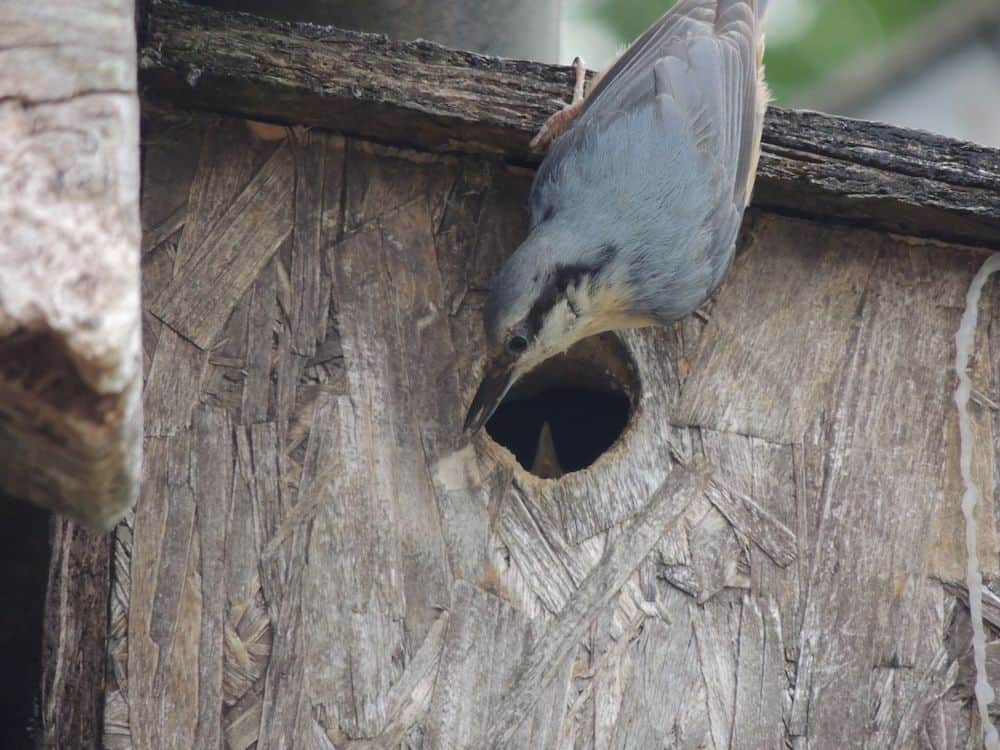
At the beginning of the month the three pairs of jackdaws using nest boxes visible from our bedroom window were all now incubating eggs, but the males were still bringing the odd piece of nesting material. Young rooks were wheezing from their nests high in the oaks and a male blackcap sang to them solidly for three weeks.
Specifically on the second of May, while taking the Labradors for a wander down our entry lane I spotted a female glow-worm. Among my books I have a Readers Digest Field Guide on Birds and Butterflies published in 1984. I particularly enjoy the book for its numerous illustrations but the article on the glow-worm, with delightful Latin name of Lampyris Noctiluca starts:
“Fifty years ago glow-worms were common in the British countryside, so common in some locations that people could read by the light. Now they are very rare, probably because of the loss of meadows and grassland.”
Of course, it is not fifty years but eighty six years ago now, so I was delighted to find this rare insect.
Glow-worms are relatives of the tropical fireflies. It is only the female, which looks like a short, fat caterpillar who emits light from the last three segments of its body. The insect manufactures OXYLUCIFERIN from water, oxygen and an enzyme and the light is enhanced by a layer of reflective cells. The female emits this light to attract the winged male who looks like a small long but narrow beetle. I hope to see more during the summer.
We found toads and slowworms particularly, hiding under corrugated iron sheets put in the orchard to attract them.
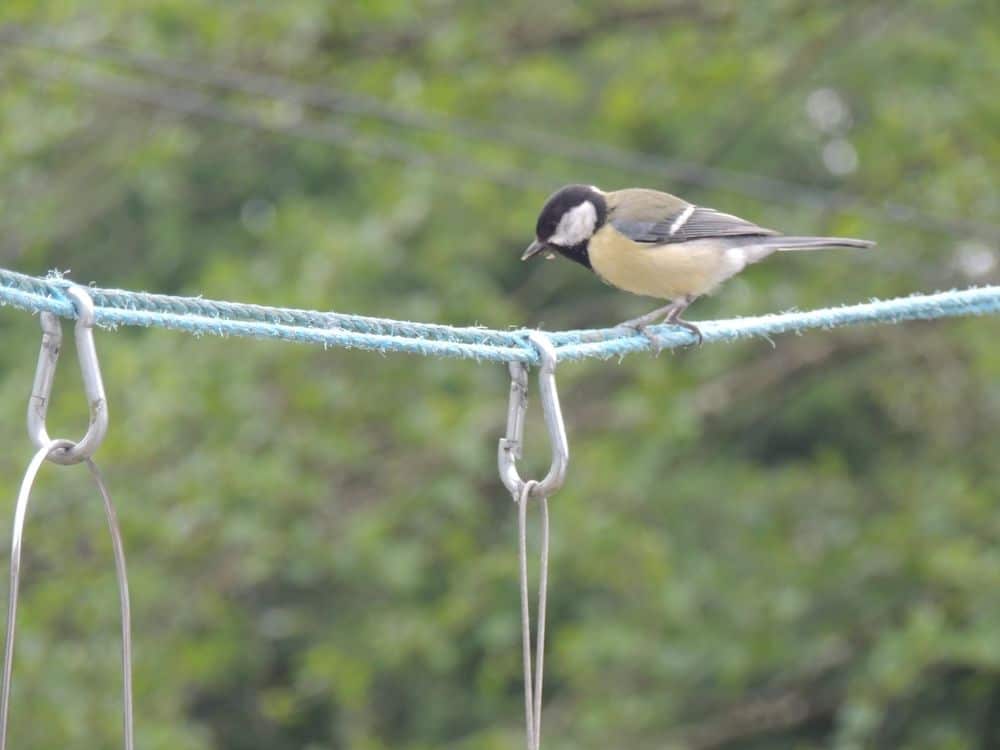
Peculiarly, having had up to sixteen long tailed tits on our feeders in winter and spring up to the end of April, we saw none in May.
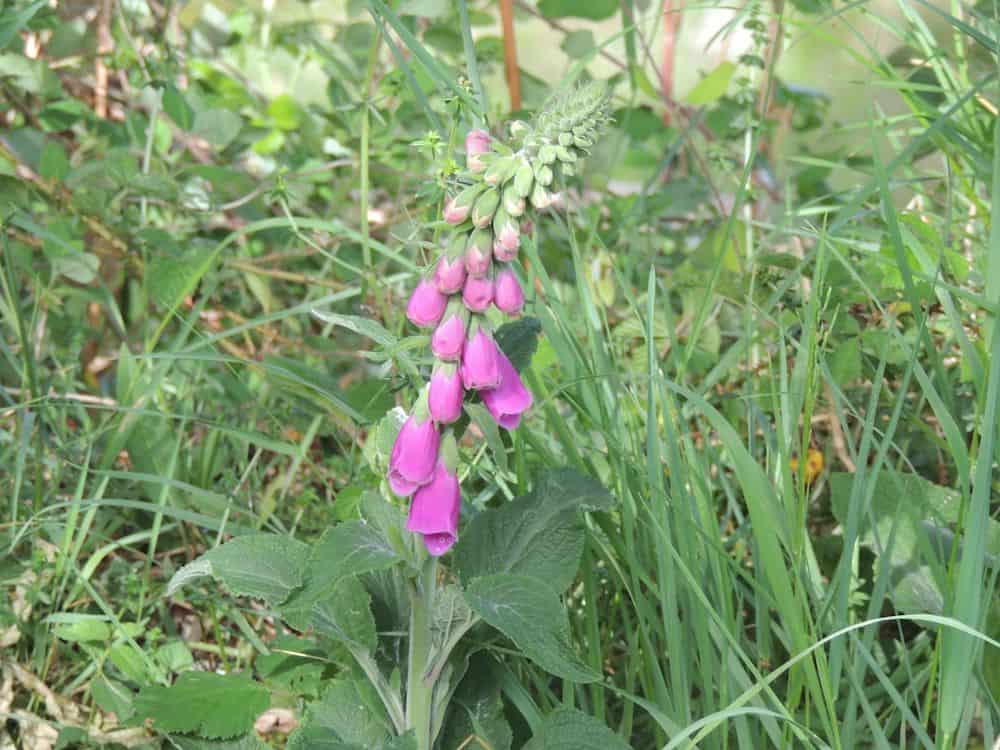
Foxgloves, those beautiful pink towers of flowers came out this month, as did Himalayan yellow poppies and cow parsley and the beginning of some magnificent thistle plants and two of my absolute favourites, ragged robin and lady’s smock.
As far as butterflies, we enjoyed wood whites, large white (gardener’s nightmare), speckled browns, ringlet and small coppers as additional sightings in May.
One of my favourites is the common buzzard and on 9th May we watched eight birds circling over the firs above Tredivett Mill. They were harassed by rooks nesting nearby. No doubt young rooks would be a tasty morsel to a buzzard but they were kept well away by the adult birds diving and swerving at them.
On 13th May, having had a slight easing of lockdown, Cherry and I drove over to Dartmoor and enjoyed a private picnic where we watched skylarks, stonechats, meadow pipits, ravens and buzzards. It was my first time out for eight weeks and was most rewarding, even seeing some newly born Dartmoor ponies.
Now on to the cats. We still have two young pumas from last year but through a gentleman called Ken Simms, a senior and well reputed zoo director in Norfolk, we think we have a very good home for our two youngsters.
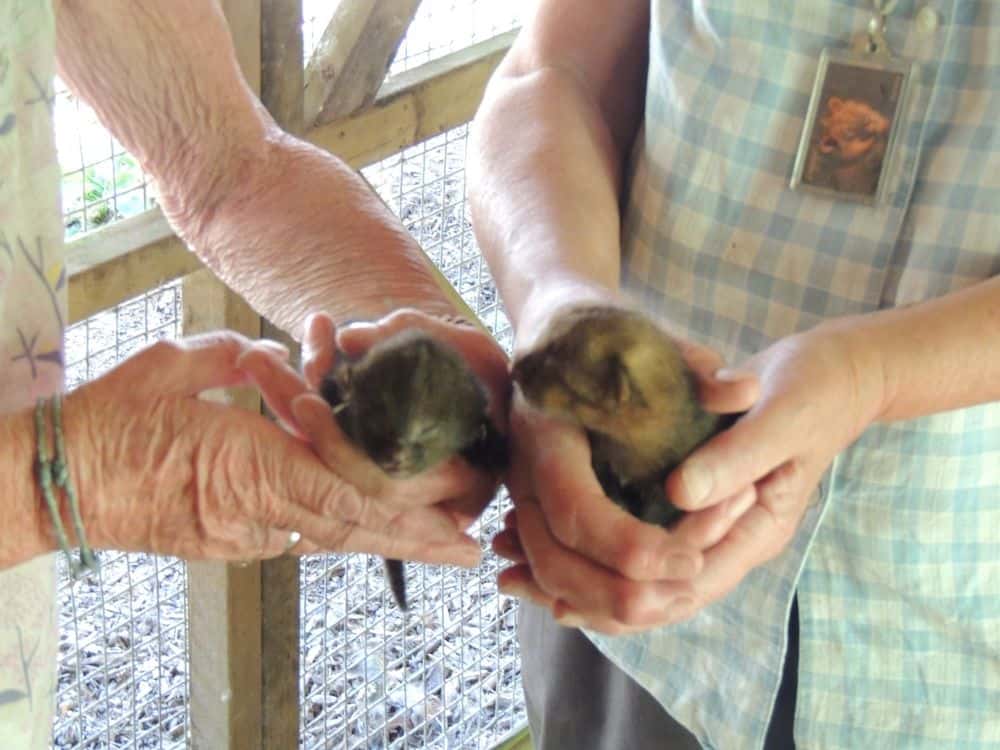
On the 26th May our female jaguarundi gave birth to two tiny kits, one black and one red. She kept very close guard and we could not see how many until 31st May when she left them to relieve herself and have some food for the first time in our presence.
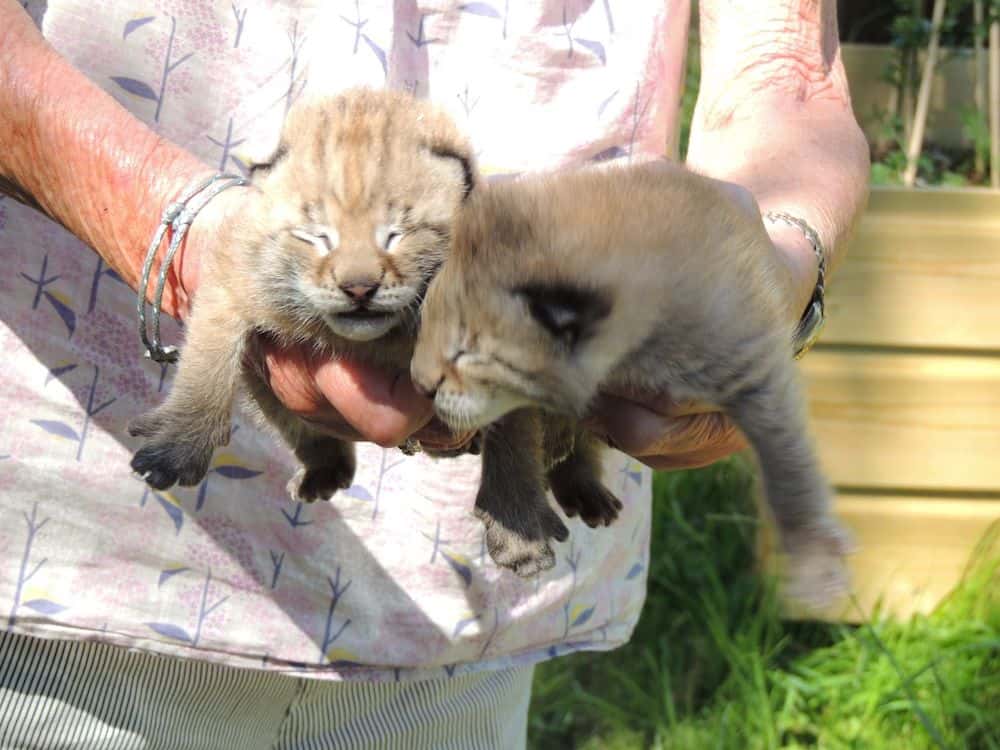
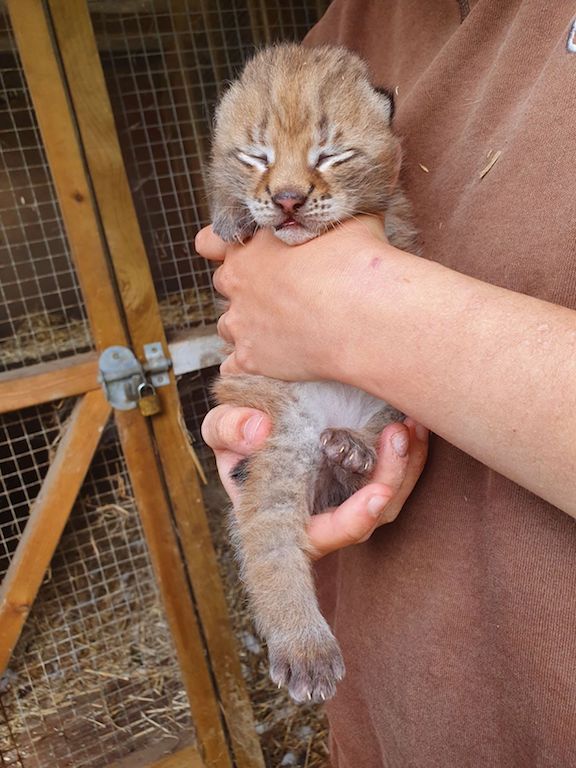
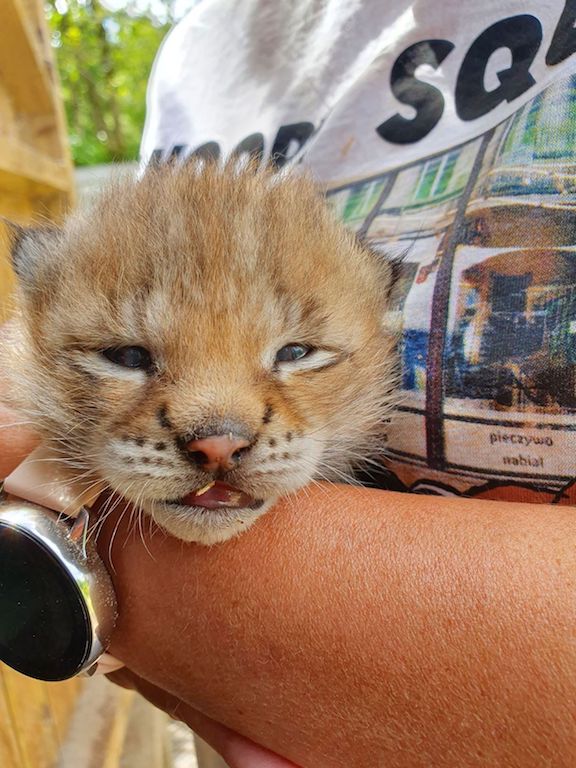
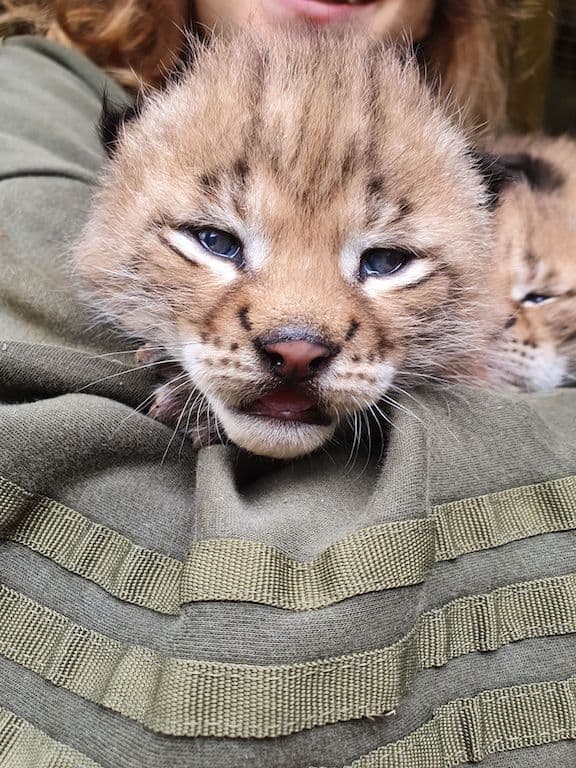
On the 27th May our two lynx ladies gave birth, one having one baby and the other having three babies all on the same night. Orla gave birth to three in the much more private inside, inner ‘hospital’ cage (all connected by flexible closures) and Fred (named after a veterinary nurse) gave birth to her baby in the same house on the floor of Seamus’s lair, while he literally nested on his ‘top shelf.’
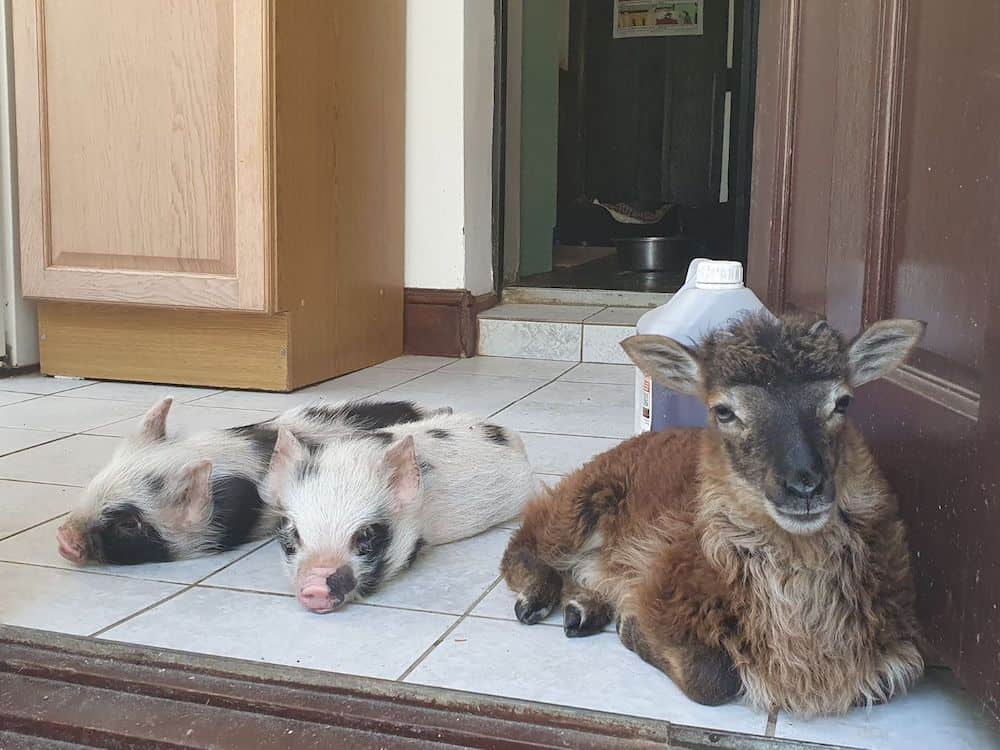
With regard to other animals and birds, we were given a young tame magpie, which will make a marvellous educational animal.
We also received three Rothschild’s Mynahs; a new female for our lone male and a new pair of youngsters. We have had their totally renovated houses ready for them for two or three months.
Also, our lonely marmoset now has a companion. They both get on very well and actually got on immediately they were introduced.
Finally, back to wild sightings. Chery saw a red kite on the 31st May. She didn’t mention it to me until I spotted probably the same bird the next day, flying high over Tredivett Mill, magnificent with its swallow tail, gliding around in a vivid blue sky.
Back to insects to end with. It has been an absolutely fabulous year for butterflies as already mentioned, and May being the sunniest month on record has been brilliant for dragonflies and damselflies.
Below are our sightings this month:
Dragonflies:
- Emperor dragonfly
- Southern aeshna
- Common aeshna
- Golden ringed dragonfly
- Blue aeshna
Damselflies:
- Banded damselfly
- Beautiful Demoiselle
- Common Ischnura (blue tailed)
- Emerald damselfly (green tail)
- Common coenagrion
Darters
- Four spoted libellula
- Keeled Orthetrum
- Broad bodied libellula
Other:
- Mayfly
- Caddisfly
- Green lacewing
I hope all who might read this are keeping safe and like Cherry and me, find enormous restorative value in wildlife of all types.
Gallery of images this May